VIN Check Before Buying a Car: 7 Reasons You Can’t Skip This Step
- What Is a VIN Check?
- 7 Reasons to Run a VIN Check Before Buying a Car
- What a VIN Check Report Reveals
- How to Run a VIN Check Before Buying a Car
- Free vs. Paid VIN Checks: What You Need to Know
- VIN Check Red Flags That Should Stop the Sale
- Get a Complete VIN Check With VINCheckup
- Frequently Asked Questions
Every year, millions of Americans purchase used vehicles — and according to data from the National Motor Vehicle Title Information System (NMVTIS), roughly one in three used cars on the market has some kind of reported issue in its history. From undisclosed accident damage to rolled-back odometers, the risks of buying a used car without doing your homework are very real.
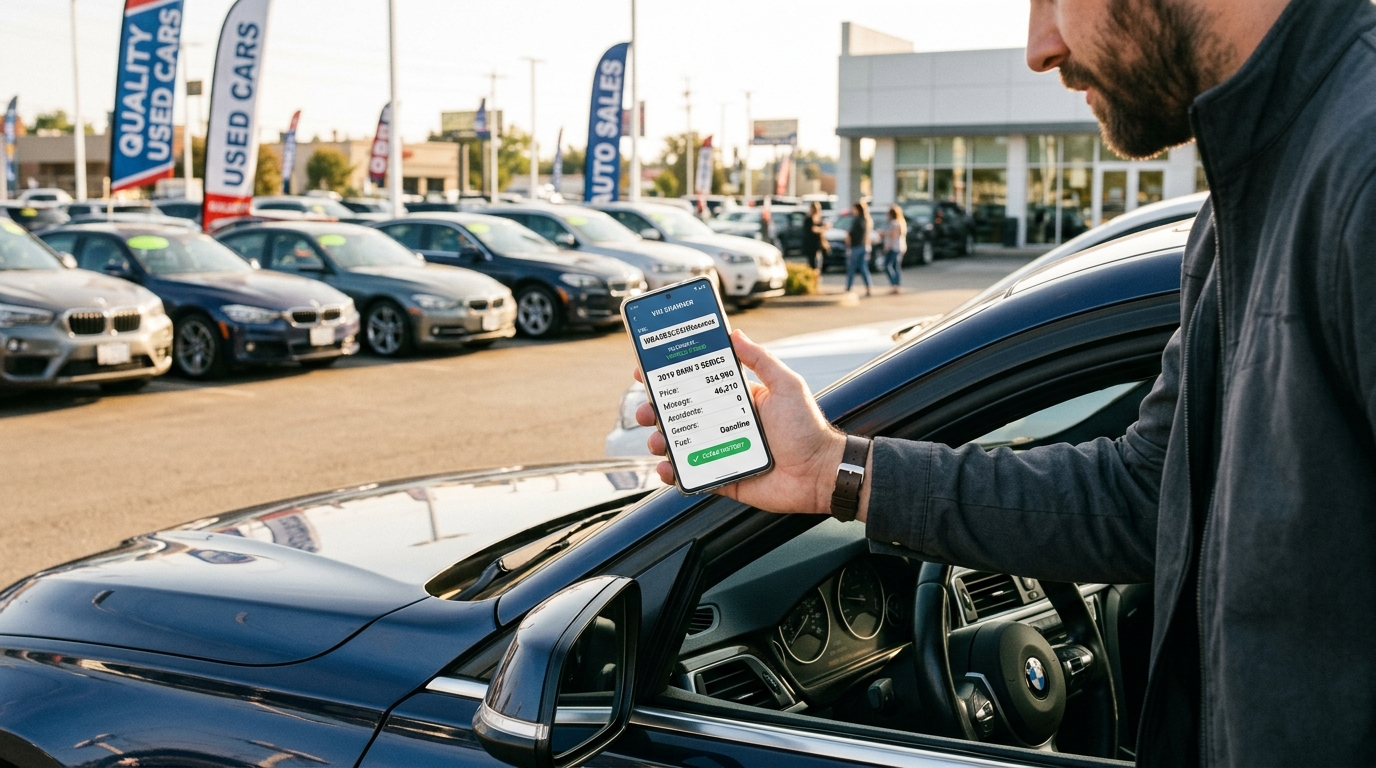
That’s exactly why running a VIN check before buying a car isn’t just a smart idea — it’s one of the most important steps in the entire buying process. A Vehicle Identification Number (VIN) check gives you instant access to a car’s complete documented history, including details that sellers may not volunteer or even know about.
Whether you’re shopping at a dealership, browsing private listings, or considering a vehicle from an online marketplace, this guide walks you through exactly why a VIN check matters, what it reveals, and how to run one in minutes. By the end, you’ll know how to protect yourself from costly mistakes and buy with real confidence.
What Is a VIN Check?
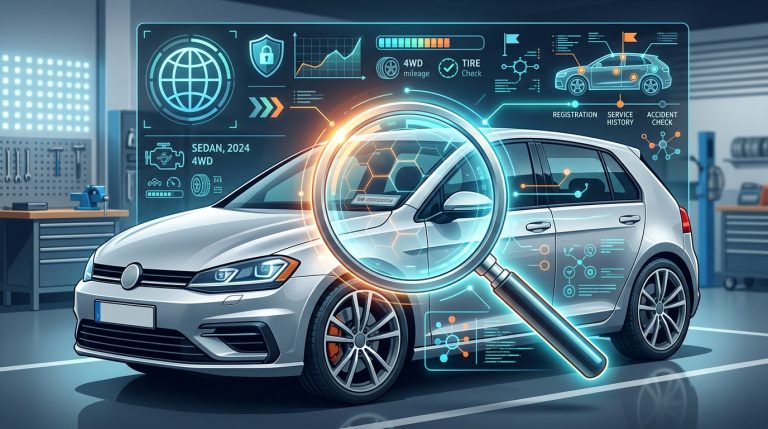
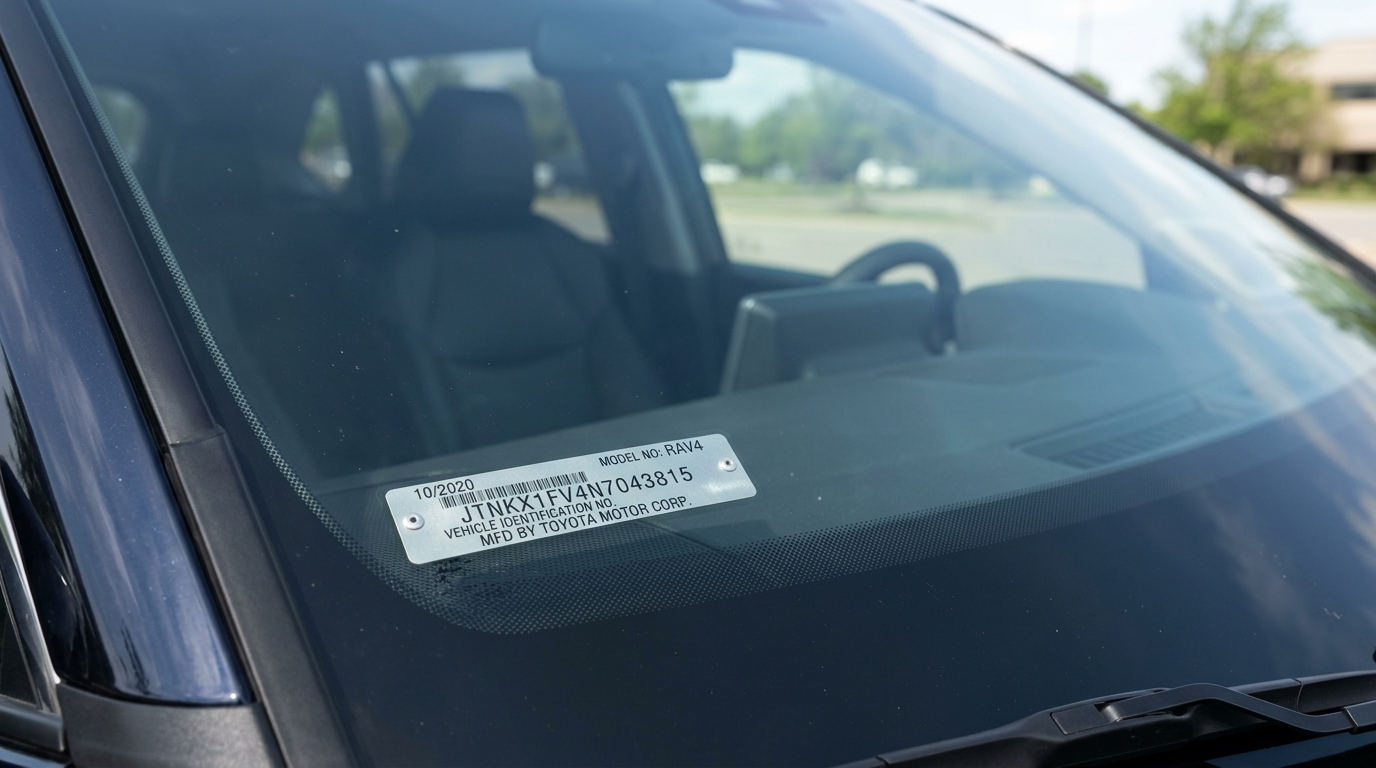
A vehicle history search uses a car’s unique 17-character identification number to pull its complete documented history. Every car, truck, SUV, and motorcycle manufactured since 1981 has a unique VIN assigned at the factory, and that number follows the vehicle for its entire life.
When you run a vehicle history lookup, the search pulls data from sources including the NMVTIS federal database, state DMV records, insurance company claims, auction records, and manufacturer databases. The result is a comprehensive report that tells you virtually everything that’s happened to that vehicle since it rolled off the assembly line.
If you’re new to VINs, our complete guide on what is a VIN check breaks down the basics in detail. For now, the key takeaway is that this single search can save you from thousands of dollars in unexpected problems.
7 Reasons to Run a VIN Check Before Buying a Car
Skipping this step is one of the most expensive mistakes used car buyers make. Here are the seven most important reasons to always run a VIN check before purchasing any vehicle.
1. Uncover Hidden Accident History
One of the most common issues with used cars is undisclosed accident damage. Industry data suggests that roughly one in five vehicles on the road has been in a reported collision. A vehicle history report reveals whether the car has been in accidents, the severity of the damage, and whether it was professionally repaired. Structural damage from a serious accident can compromise safety even after repairs are complete — and knowing about past incidents helps you negotiate a fair price or walk away entirely.
2. Detect Title Problems
A VIN check before buying a car will flag critical title issues including salvage titles, rebuilt titles, and flood damage designations. These exist because the vehicle was previously declared a total loss by an insurance company. Some sellers attempt title washing — transferring a vehicle across state lines to clean its title history. A thorough vehicle history report cuts through this tactic and shows the real status.
3. Spot Odometer Fraud
The NHTSA estimates that odometer fraud costs American consumers more than $1 billion every year. Tampering with the odometer to show fewer miles makes a high-mileage vehicle appear more valuable and hides real wear. VIN lookup reports compare reported mileage readings from inspections, service visits, and registration events over time, making inconsistencies easy to catch.
4. Verify Ownership History
A vehicle history report shows you how many previous owners the vehicle has had, how long each person owned it, and in which states it was registered. Frequent ownership changes in short periods can indicate recurring mechanical problems. A car that was registered in flood-prone states like Florida, Louisiana, or Texas may also warrant extra scrutiny for water damage that isn’t immediately visible.
5. Check for Outstanding Recalls
Manufacturers issue safety recalls regularly, and not all owners follow through with repairs. A VIN lookup tells you whether the vehicle has open recalls that need to be addressed. You can also verify recalls directly through the NHTSA recall database, but a vehicle history report conveniently bundles this information alongside everything else.
6. Confirm Vehicle Specifications
Sellers sometimes misrepresent a vehicle’s trim level, options package, or even model year. Decoding the VIN confirms the exact factory specifications, including engine type, transmission, drivetrain, and country of manufacture. Our guide on how to read a VIN number explains how each digit in the VIN corresponds to specific vehicle details.
7. Protect Your Investment
The average used car transaction price exceeded $27,000 in 2025 according to industry reports. That’s a serious financial commitment, and a vehicle history report typically costs less than $30 — often far less. When you compare the small cost of a report to the potential thousands you could lose on a problematic vehicle, running a VIN check is among the highest-ROI decisions you can make as a buyer.
What a VIN Check Report Reveals
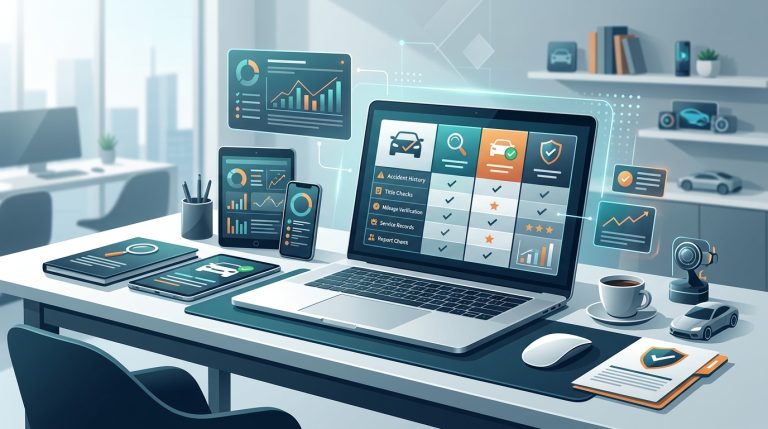
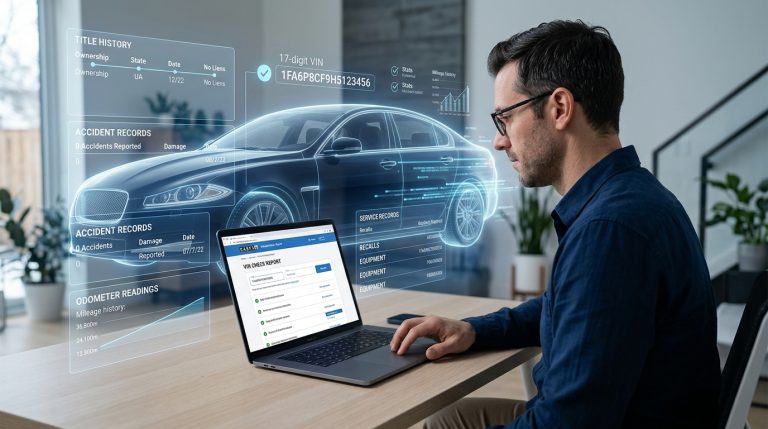
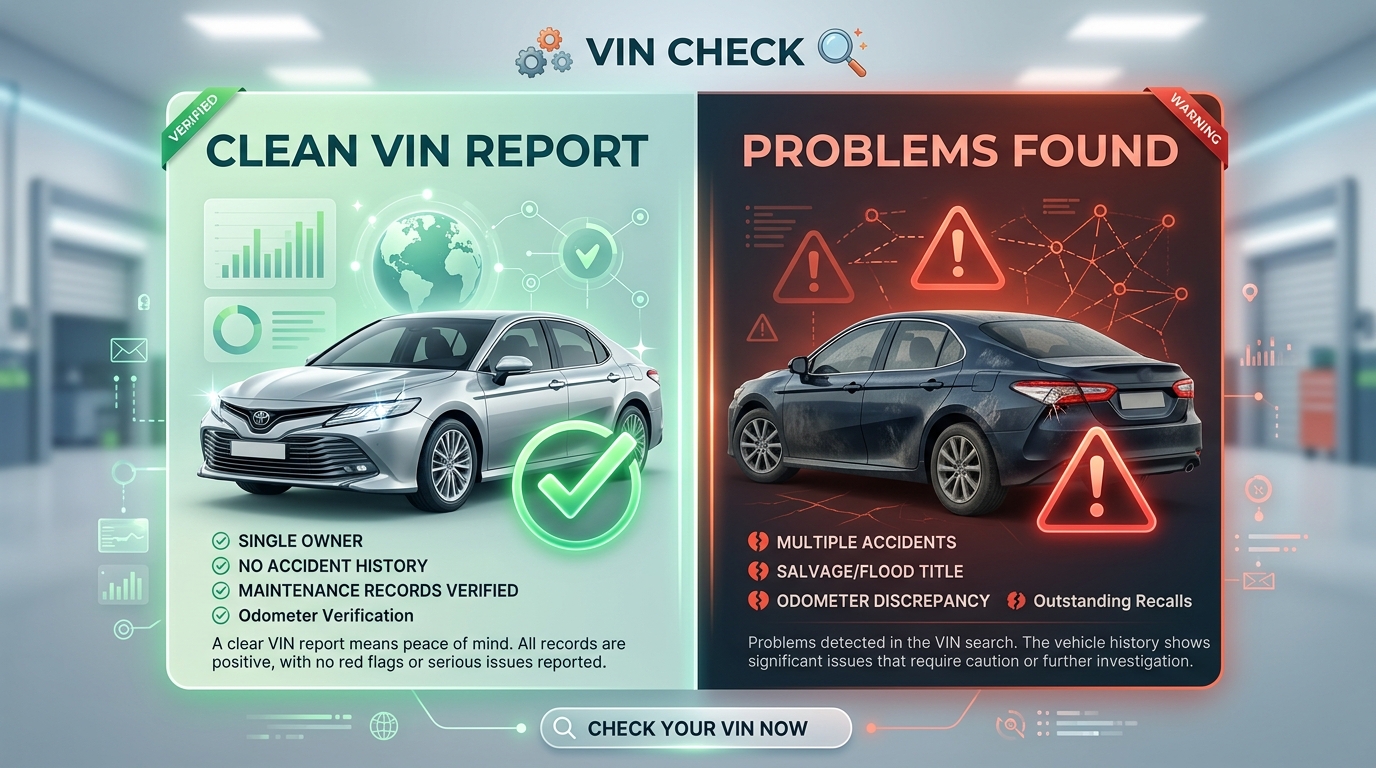
A comprehensive vehicle history report compiles data from dozens of sources to give you a complete picture. Here’s what a quality report includes:
- Accident and damage history — reported collisions, severity, and repair records
- Title records and brand history — salvage, rebuilt, flood, lemon law buyback, and junk designations
- Odometer readings over time — chronological mileage records from inspections and registrations
- Number of previous owners — including ownership duration and location
- Registration history by state — reveals where the vehicle has been throughout its life
- Outstanding manufacturer recalls — open safety recalls requiring attention
- Theft records — whether the vehicle has been reported stolen
- Lien information — any outstanding financial obligations tied to the vehicle
- Structural and frame damage — damage that can compromise crash safety
- Auction history and photos — images from insurance auctions if the vehicle was totaled
This data comes from sources like the NMVTIS federal database, insurance companies, state DMVs, repair facilities, and auto auctions. For a deeper dive into how the federal database works, see our guide on NMVTIS vehicle history.
Not all vehicle history providers pull from the same data sources, which is why the depth and accuracy of reports can vary significantly. We cover the differences in detail in our comparison of the best VIN check services.
How to Run a VIN Check Before Buying a Car
Running a VIN check is straightforward. Follow these four steps to get a complete vehicle history report before committing to any purchase.
Step 1: Locate the VIN
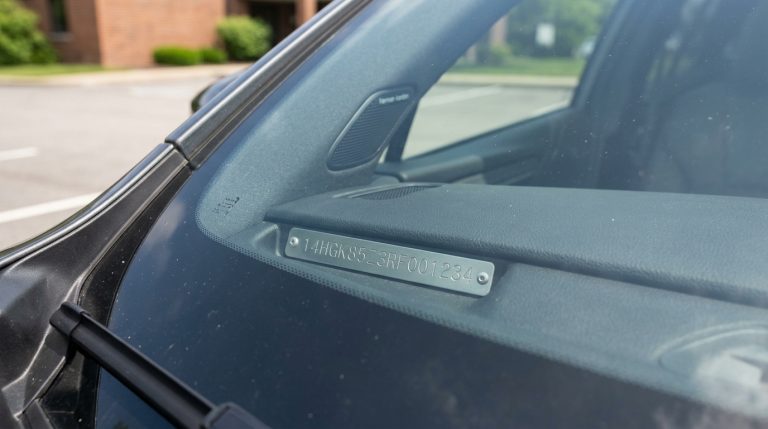
You can find the VIN in several places on any vehicle:
- Dashboard — visible through the windshield on the driver’s side (most common)
- Driver’s side door jamb — on a sticker that also shows tire pressure specs
- Vehicle registration documents — your state’s title or registration card
- Insurance documents — listed on your policy or ID card
Always verify the VIN on the vehicle matches the VIN on the paperwork. A mismatch is a serious red flag that could indicate VIN cloning or a swapped vehicle.
Step 2: Choose a VIN Check Service
While free vehicle history lookups exist, they typically provide very limited information. For a complete picture before making a purchase, you’ll want a service that aggregates data from multiple databases. We recommend VINCheckup for its comprehensive reports and clear, easy-to-read format.
Step 3: Run the Report
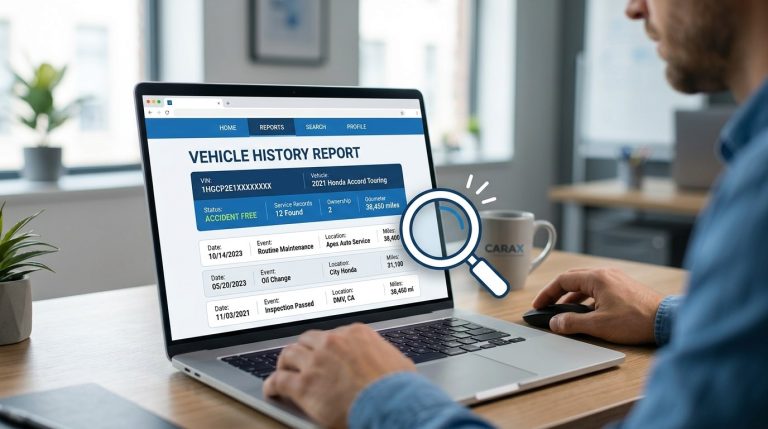
Enter the 17-character VIN on the service’s website. Most reports generate within seconds. Review every section of the report carefully — don’t just skim the summary at the top. The details matter.
Step 4: Compare With the Seller’s Claims
Cross-reference everything the seller told you with what the report shows. Any discrepancies between their claims and the documented history are worth investigating further — and could be grounds to renegotiate the price or walk away from the deal altogether.
Free vs. Paid VIN Checks: What You Need to Know
The NHTSA offers a free recall check, and the National Insurance Crime Bureau (NICB) provides a free theft and total loss check. These are useful starting points but nowhere near comprehensive enough for a purchase decision.
Free checks typically don’t include accident history, detailed ownership records, odometer verification, lien status, or auction data. These are precisely the details that matter most when you’re evaluating a vehicle for purchase.
Paid vehicle history services like VINCheckup aggregate data from dozens of sources to give you the full picture. For a purchase as significant as a used car, the cost of a comprehensive vehicle history report — typically $20 to $40 — is minimal insurance against discovering expensive problems after the sale is final.
Our detailed comparison of free vs. paid options breaks this down further. But the bottom line is clear: if you’re seriously considering purchasing a vehicle, invest in a complete report.
VIN Check Red Flags That Should Stop the Sale
When reviewing a vehicle history report, watch for these warning signs that indicate potential trouble:
- Salvage or rebuilt title — The vehicle was previously declared a total loss. While some rebuilt vehicles can be mechanically sound, insurance coverage may be limited, and resale value takes a significant hit.
- Inconsistent odometer readings — Mileage that decreases between recorded readings or shows suspicious jumps is a strong indicator of odometer tampering.
- Multiple owners in a short period — Rapid turnover often signals recurring mechanical or electrical problems that previous owners couldn’t resolve.
- Flood damage history — Water-damaged vehicles can develop long-term electrical failures and corrosion issues that may not surface for months after purchase.
- Open safety recalls — Unaddressed recalls involving airbags, braking systems, or fuel systems pose serious and immediate safety risks.
- Structural or frame damage — Frame damage can permanently compromise the vehicle’s crash protection capabilities, even after professional repair.
- Title washing indicators — Registration across multiple states in quick succession may indicate an attempt to scrub the title of negative brands.
If any of these appear in the report, proceed with extreme caution. In many cases, walking away is the smartest financial decision you can make. For additional guidance on evaluating vehicles, check our VIN number lookup guide.
Get a Complete VIN Check With VINCheckup
Ready to check a vehicle before you commit? VINCheckup provides one of the most detailed and reliable VIN reports available, pulling from NMVTIS, state records, insurance databases, and more. You’ll get a complete picture of any vehicle’s documented history in seconds.
Whether you’re buying from a dealer, private seller, or online marketplace, a VINCheckup report gives you the verified information you need to make a confident decision. Don’t risk thousands of dollars on a vehicle with a hidden past.
Frequently Asked Questions
How much does a VIN check cost?
Most comprehensive VIN check services charge between $20 and $40 for a single report. Some providers offer multi-report bundles at a discount, which is useful if you’re comparing several vehicles. Basic recall and theft checks through government sites like NHTSA and NICB are free but limited in scope.
Can I run a VIN check for free?
Yes, but free checks only cover limited data points. The NHTSA offers free recall lookups, and the NICB offers free theft and total loss checks. For a complete vehicle history — including accident records, odometer verification, and ownership history — you’ll need a paid service like VINCheckup.
How long does a VIN check take?
Online vehicle history reports generate almost instantly, typically within 30 seconds. The VIN is cross-referenced against multiple databases automatically, and you can view or download your report immediately.
Is a VIN check the same as a vehicle inspection?
No. A VIN lookup reveals the vehicle’s documented history from databases and records. A physical inspection examines the vehicle’s current mechanical and structural condition. For maximum protection, you should do both before purchasing any used vehicle.
Where can I find a vehicle’s VIN?
The most common location is on the dashboard, visible through the windshield on the driver’s side. It’s also printed on the driver’s door jamb sticker and listed on all registration and insurance documents. Always verify that the VIN on the vehicle matches the VIN on the paperwork.
Final Thoughts
Running a VIN check before buying a car is one of the simplest and most effective ways to protect yourself in the used vehicle market. For a minimal investment, you gain access to critical information about a vehicle’s accident history, title status, odometer accuracy, recall status, and much more.
Don’t rely solely on a seller’s word or a clean-looking exterior. The data tells the real story — and a VIN check makes that data accessible to every buyer. With so much money on the line, there’s simply no good reason to skip this step.
Ready to check a vehicle? Get started with VINCheckup today.