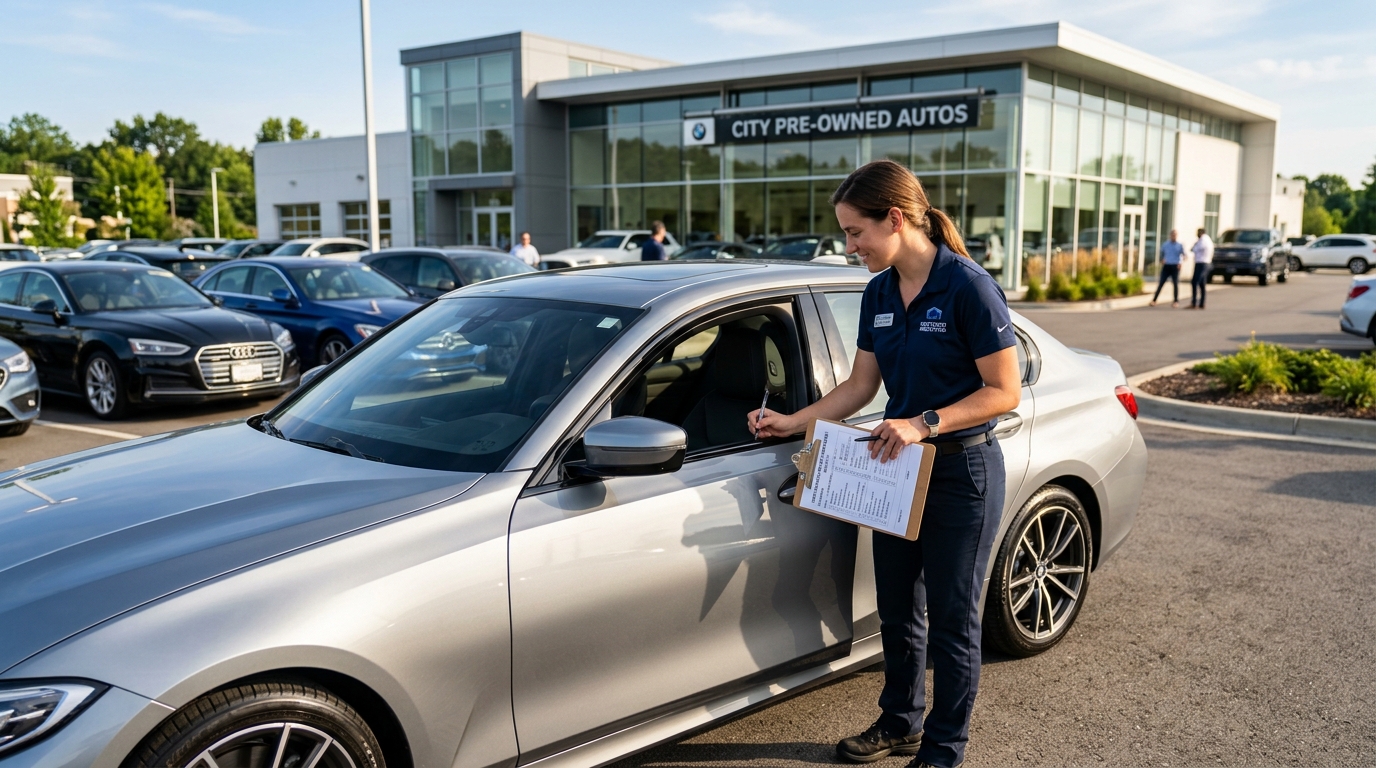
Used Car Buying Checklist 2026: 15 Steps to Avoid a Bad Deal
- Why You Need a Used Car Buying Checklist
- Before You Start Shopping (Steps 1–3)
- Researching the Vehicle (Steps 4–6)
- Inspecting the Car in Person (Steps 7–10)
- The Test Drive (Step 11)
- Running a VIN Check (Step 12)
- Negotiating and Closing the Deal (Steps 13–15)
- Used Car Red Flags That Should Stop the Deal
- How VINCheckup Simplifies Your Checklist
- Frequently Asked Questions
Buying a used car without a plan is like walking into a casino and hoping for the best. The stakes are high — the average used car transaction in 2025 topped $28,000, according to Kelley Blue Book. That’s a lot of money to gamble on gut instinct alone.
A solid used car buying checklist is the single most effective tool you can bring to the process. It keeps you organized, helps you catch problems early, and gives you the confidence to walk away from a bad deal — or pull the trigger on a good one. Whether you’re buying from a dealership or a private seller, these 15 steps will protect your wallet and your peace of mind.
We’ve spent years analyzing vehicle history data and helping consumers make smarter purchases. This checklist distills everything we’ve learned into an actionable, step-by-step guide you can print out and take with you to every showing.
Why You Need a Used Car Buying Checklist
Here’s the reality: roughly 1 in 5 used cars on the market has an unreported issue, ranging from hidden accident damage to rolled-back odometers. The National Highway Traffic Safety Administration (NHTSA) estimates that odometer fraud alone costs American consumers over $1 billion annually.
A structured car buying checklist prevents you from getting swept up in the excitement of a “great deal.” It ensures you verify every critical detail before handing over your money. Think of it as a pilot’s pre-flight checklist — skipping steps doesn’t save time, it creates risk.
The best part? Following a thorough used car buying checklist doesn’t slow you down. It actually speeds up the process by helping you eliminate bad options faster and focus on cars that are genuinely worth your time.
Before You Start Shopping (Steps 1–3)
Step 1: Set a Realistic Budget
Before you browse a single listing, determine your total budget — not just the sticker price. Factor in:
- Purchase price — the negotiated amount you’ll pay for the vehicle
- Sales tax and registration — varies by state, typically 5–10% of purchase price
- Insurance costs — get quotes on specific models before committing
- Maintenance reserve — set aside $1,000–$2,000 for first-year repairs
- Vehicle history report — budget $20–$40 for a comprehensive VIN check
This first step in your used car buying checklist is often overlooked, but it’s foundational. A common rule of thumb: your total transportation costs (payment, insurance, fuel, maintenance) shouldn’t exceed 15–20% of your monthly take-home pay.
Step 2: Research Reliable Makes and Models
Not all used cars are created equal. Some models hold up remarkably well at high mileage, while others become money pits after 60,000 miles. Consult reliability ratings from Consumer Reports and J.D. Power to narrow your search to models with proven longevity.
Pay special attention to common mechanical issues for each model year. A quick search for “[model] [year] common problems” can reveal known defects, like transmission failures or engine issues that could cost thousands to repair.
Step 3: Get Pre-Approved for Financing
If you’re financing, get pre-approved through your bank or credit union before you step onto any lot. Dealer financing isn’t always the best deal — having a pre-approval in your pocket gives you negotiating power and a clear interest rate baseline.
Researching the Vehicle (Steps 4–6)
Step 4: Check Market Value
Use tools like Kelley Blue Book, Edmunds, and NADA Guides to determine the fair market value of the car you’re considering. Compare the asking price against similar vehicles in your area. If a price seems too good to be true, it usually is — and that’s a signal to dig deeper with a vehicle history search.
Step 5: Review the Listing Carefully
Look beyond the photos. Read the description for disclosures about accidents, mechanical issues, or title status. Check whether the listing mentions a salvage or rebuilt title. If the seller is vague about the car’s history, consider it a yellow flag.
Make sure the listing includes the Vehicle Identification Number. A seller who refuses to share the VIN likely has something to hide. Learn how to read a VIN number so you can quickly verify the vehicle’s specs match the listing.
Step 6: Contact the Seller and Ask Key Questions
Before scheduling a visit, call the seller and ask:
- Why are you selling the car?
- How many owners has it had?
- Has it been in any accidents?
- Are there any mechanical issues I should know about?
- Do you have maintenance records?
- Is the title clean?
Pay attention to how they answer. Honest sellers welcome questions. Evasive answers are a red flag you should take seriously.
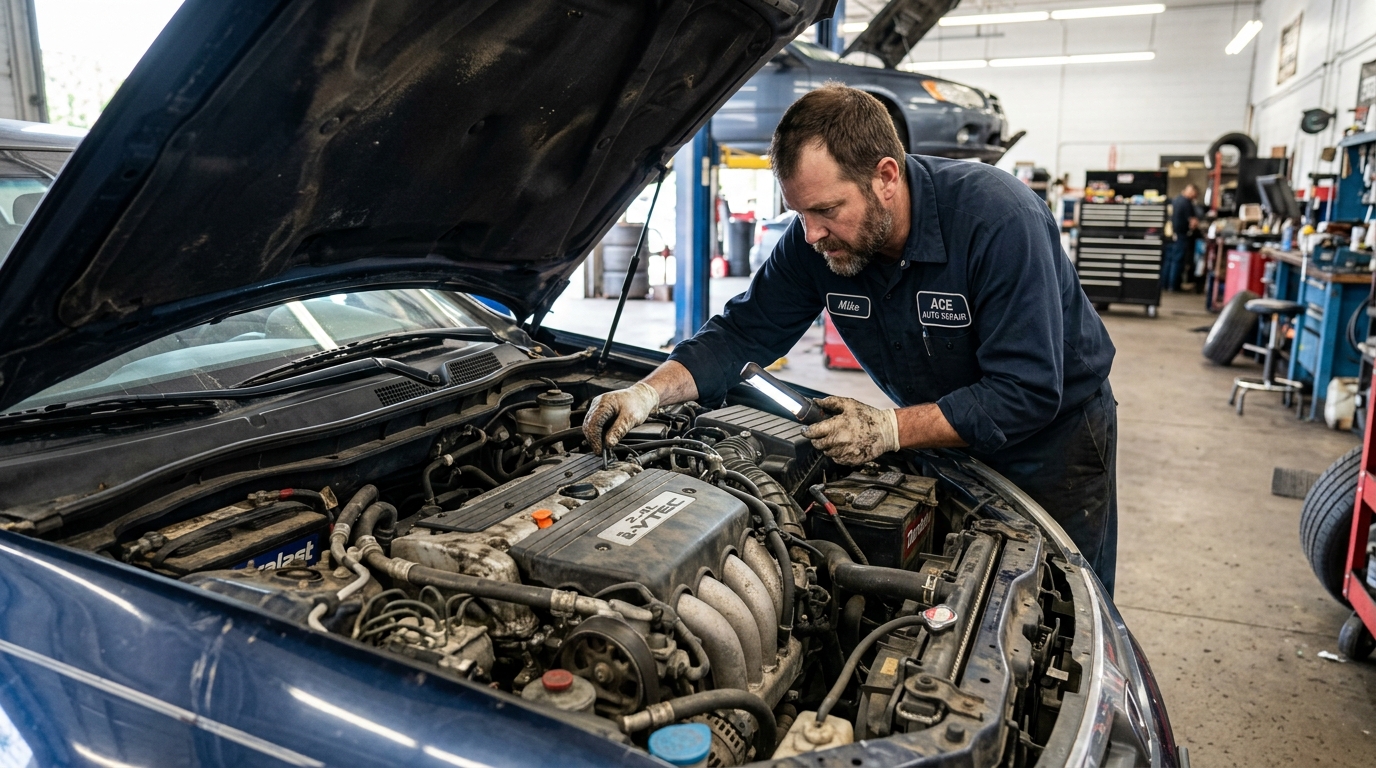
Inspecting the Car in Person (Steps 7–10)
Step 7: Examine the Exterior
Arrive during daylight and inspect the car on a flat, well-lit surface. Walk around the vehicle slowly and look for:
- Paint inconsistencies — mismatched colors or texture between panels suggest body work
- Panel gaps — uneven spacing between doors, fenders, or the hood may indicate collision repair
- Rust — check wheel wells, rocker panels, and under the doors
- Tire wear — uneven wear patterns signal alignment issues or suspension problems
- Glass — chips, cracks, or mismatched windshield dates
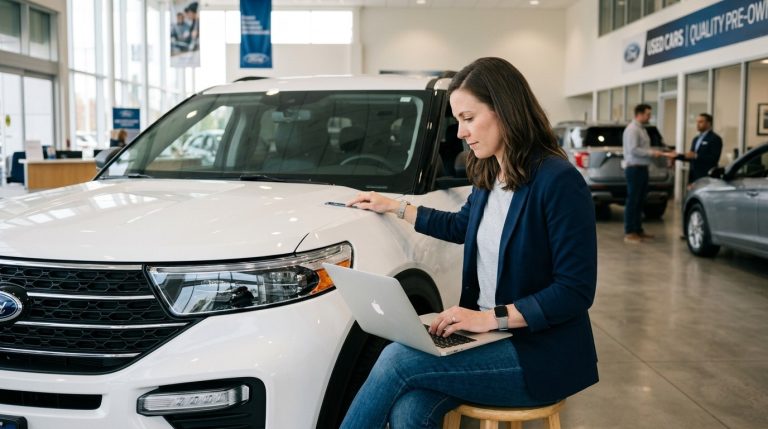
Run your hand along body panels to feel for ripples or filler. A refrigerator magnet can help detect body filler — it won’t stick to filled areas on steel-body vehicles.
Step 8: Inspect the Interior
The interior tells a story. High wear on the driver’s seat, steering wheel, and pedals on a “low-mileage” car could indicate odometer tampering. Check for:
- Functioning AC, heat, and all fan speeds
- All power windows, locks, and mirrors
- Infotainment system, Bluetooth, and backup camera
- Seat adjustments and condition
- Musty or moldy smells (could indicate water damage)
- Stains on the headliner or carpet (possible flood damage)
Step 9: Check Under the Hood
You don’t need to be a mechanic to spot warning signs. Open the hood and look for:
- Oil condition — pull the dipstick; dark, gritty oil signals neglect
- Coolant — should be green, orange, or pink — never brown or milky
- Battery — check for corrosion on terminals and the manufacturing date
- Belts and hoses — look for cracks, fraying, or swelling
- Fluid leaks — check under the car for drips or stains
A clean engine bay on an older car can actually be suspicious — it may have been detailed to hide leaks.
Step 10: Verify the VIN in Multiple Locations
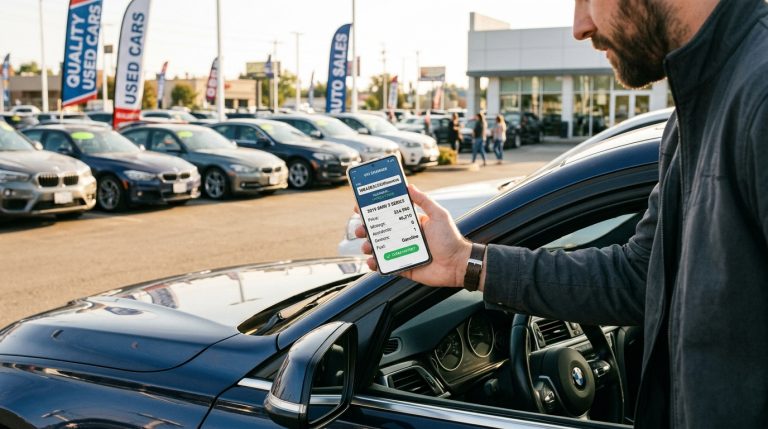
Every vehicle has its VIN stamped in several locations: the dashboard (visible through the windshield), the driver’s door jamb, and the engine block. Compare all VIN locations to make sure they match. Mismatched VINs are a serious warning sign that could indicate a stolen vehicle or VIN cloning.
Use a VIN decoder to confirm that the decoded information (make, model, year, engine type) matches the actual car sitting in front of you.

The Test Drive (Step 11)
Step 11: Take a Thorough Test Drive
A quick spin around the block isn’t enough. Plan a test drive that includes:
- Highway driving — accelerate to highway speed to check for vibrations or pull
- Stop-and-go traffic — test the transmission’s behavior in slow conditions
- Rough roads — listen for suspension clunks or rattles
- Parking — check the steering at full lock in both directions
- Cold start — arrive early and start the car cold to hear the engine’s initial behavior
During the drive, turn off the radio and listen. Unusual sounds — grinding, whining, clunking, or ticking — are clues. Pay attention to how the brakes feel, whether the steering pulls in either direction, and how the transmission shifts between gears.
Running a VIN Check (Step 12)
Step 12: Pull a Vehicle History Report
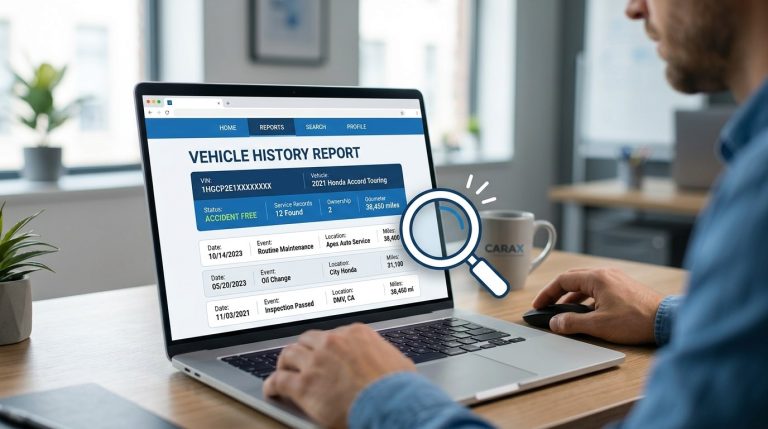
This is the step most buyers either skip or underestimate — and it’s arguably the most important item on any used car buying checklist. A comprehensive vehicle history report reveals critical information that the seller may not disclose:
- Accident history — including severity, which airbags deployed, and where impacts occurred
- Title records — salvage, rebuilt, flood, or lemon law titles
- Odometer readings — historical records that expose rollbacks
- Ownership history — number of previous owners and registration states
- Recall status — open safety recalls from NHTSA
- Lien records — whether anyone else has a financial claim on the vehicle
The data comes from the National Motor Vehicle Title Information System (NMVTIS), insurance companies, service shops, and auction records. A free VIN check can provide basic data, but paid reports from services like VINCheckup deliver the full picture. Considering the cost of a bad purchase, the $20–$40 investment is a no-brainer.
Negotiating and Closing the Deal (Steps 13–15)
Step 13: Get an Independent Pre-Purchase Inspection
Even if your own inspection didn’t uncover issues, hire a trusted mechanic to perform a pre-purchase inspection (PPI). Most charge $100–$200, and they’ll put the car on a lift to check the undercarriage, suspension, brakes, and drivetrain in ways you can’t do in a parking lot.
If the seller refuses to let you get an independent inspection, walk away. A legitimate seller has nothing to hide.
Step 14: Negotiate With Data
Use everything you’ve gathered — market value research, vehicle history report findings, inspection results — to negotiate a fair price. Common leverage points include:
- Prior accidents found in the VIN check report
- Upcoming maintenance (timing belt, tires, brakes)
- Minor cosmetic issues
- Higher-than-average mileage for the model year
- Comparable listings at lower prices
Don’t be afraid to negotiate firmly. Sellers expect it. A well-documented list of issues can easily justify $500–$2,000 off the asking price.
Step 15: Review All Paperwork Before Signing
Before you sign anything, verify:
- Title — must be clean and in the seller’s name (for private sales)
- Bill of sale — should include VIN, sale price, odometer reading, and both parties’ signatures
- Warranty documentation — if purchasing from a dealer, get any warranty terms in writing
- “As-is” disclosure — understand what you’re agreeing to if there’s no warranty
- Financing terms — double-check the interest rate, loan term, and monthly payment
The Federal Trade Commission (FTC) requires dealers to display a Buyers Guide on every used car, disclosing warranty coverage and known defects. Make sure you get a copy.
Used Car Red Flags That Should Stop the Deal
Even with a thorough used car buying checklist, some deals just aren’t worth the risk. Walk away immediately if you encounter:
- No title available — “I’ll get it to you later” is a classic scam
- VIN tampering — scratched, replaced, or mismatched VIN plates
- Salvage or flood title — unless you’re a mechanic buying a project car
- Pressure tactics — “someone else is coming to look at it today”
- Cash-only demands — legitimate sellers accept traceable payment methods
- Seller won’t allow inspection — they know something you don’t
- Odometer discrepancy — the reading doesn’t match the vehicle history report
- Fresh paint on specific panels — often hides recent collision damage
Trust your instincts. If something feels off, there’s always another car. The used car market has plenty of inventory — never let urgency cloud your judgment.
How VINCheckup Simplifies Your Checklist
Step 12 on this used car buying checklist — the VIN check — is arguably the highest-ROI step of the entire process. And VINCheckup makes it effortless.
With a single VIN lookup, VINCheckup delivers a comprehensive report covering accident history, title records, odometer verification, recall status, ownership history, and more. The data is sourced from NMVTIS, insurance claim databases, auction records, and service facilities — giving you the full story behind any vehicle.
Compare that to the hours you’d spend manually searching NHTSA recall databases, calling insurance companies, and tracking down title history. VINCheckup consolidates it all into one clear, easy-to-read report. Check out our detailed VINCheckup review to see exactly what you’ll get, or explore the best VIN check services for a full comparison.
Frequently Asked Questions
What should be on a used car buying checklist?
A thorough used car buying checklist should cover budget planning, vehicle research, market value comparison, a detailed physical inspection (exterior, interior, under the hood), a test drive, a comprehensive VIN check for hidden history, a pre-purchase inspection by an independent mechanic, price negotiation, and a careful review of all paperwork before signing.
How much does it cost to run a VIN check on a used car?
Basic VIN checks are available for free through NHTSA’s recall database and some third-party sites, but they only cover limited information. Comprehensive vehicle history reports typically cost $20–$40 and include accident history, title records, odometer verification, ownership history, and more. Services like VINCheckup offer detailed reports at competitive prices.
Should I get a pre-purchase inspection even if the car looks fine?
Absolutely. Many serious issues — frame damage, transmission wear, hidden leaks — aren’t visible during a standard walk-around. A professional mechanic with a lift can spot problems that save you thousands in future repairs. The $100–$200 cost is a fraction of what major repairs would run.
What’s the most important step when buying a used car?
While every step on this checklist matters, running a vehicle history report is arguably the most critical. It reveals information the seller may not know or may deliberately hide — including accident history, title problems, and odometer fraud. A quick VIN number lookup can save you from a catastrophically bad purchase.
Can I trust a used car dealer’s inspection report?
Dealer inspection reports are a starting point, not the final word. They have a financial incentive to sell you the car. Always get a second opinion from an independent mechanic who has no stake in the sale. Additionally, run your own VIN check to verify the vehicle’s history independently.
The Bottom Line
A used car can be an incredible value — or an expensive mistake. The difference almost always comes down to preparation. This 15-step used car buying checklist gives you a systematic way to evaluate any vehicle, catch hidden problems, and negotiate from a position of strength.
Print this used car buying checklist out. Save it to your phone. Bring it to every car you look at. And when you get to Step 12, make sure you run a proper vehicle history check through VINCheckup before you commit. It’s the fastest, most reliable way to verify that the car’s past matches the seller’s story.
The 20 minutes you spend on this checklist could save you $5,000 in hidden repairs — or stop you from buying a car with a concealed salvage title. Either way, you’ll drive away knowing you made an informed decision.